


LMS
Light mechanical stress
Thinnest wall of the three classes and the most economical. For runs that will not see physical load or impact.
- Surface-mounted wiring
- False ceilings and partitions
- Dry, protected indoor runs
Electrical Conduit Systems
Rigid PVC conduit in light, medium and heavy mechanical-stress classes, with bends, couplers and junction boxes to complete the wiring run.
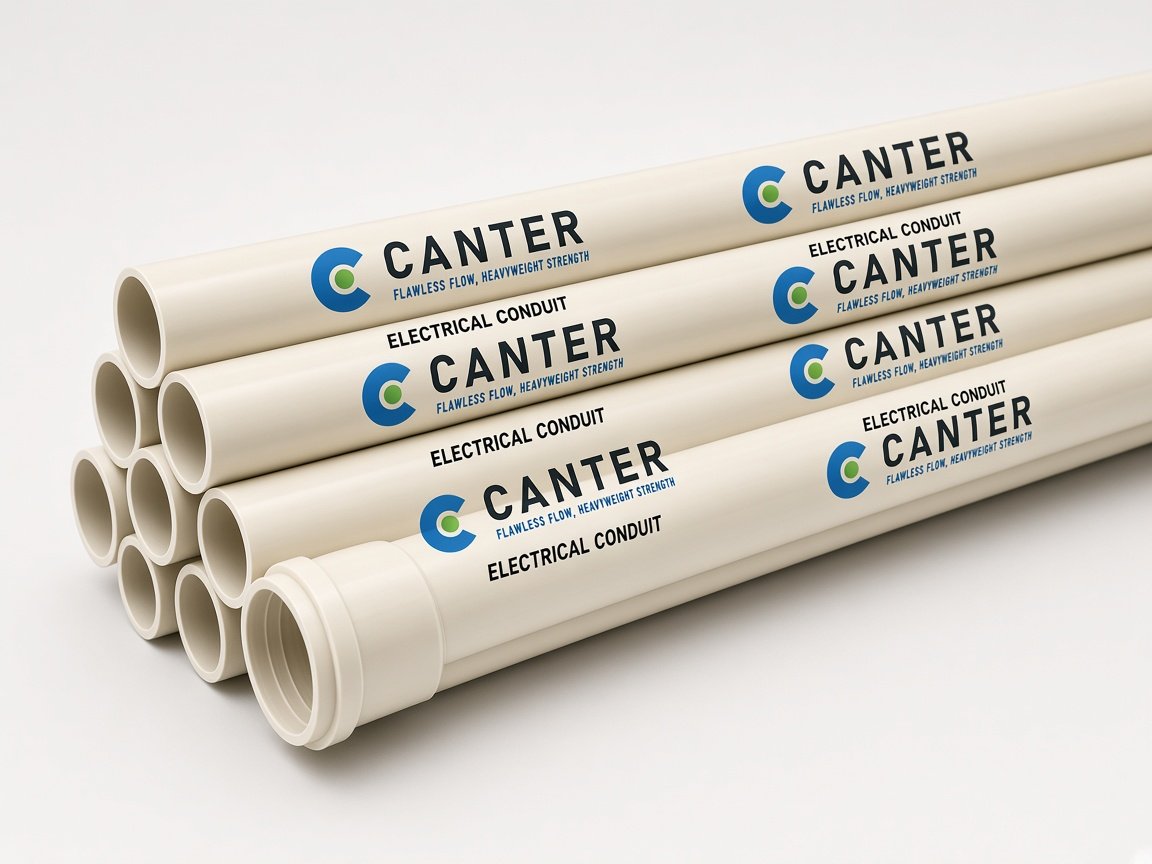
Rigid PVC conduit
Electrical conduit is the pipework that carries and protects building wiring. Rigid PVC conduit is non-metallic, so it does not rust or corrode, it is light to carry and easy to cut and join, and its smooth bore lets cables be drawn through without snagging.
CANTER conduit is made by Suvega Innovations at Pipalkhiriya, Raisen. It is classified by how much mechanical stress it can take - LMS, MMS or HMS - so you can match the wall thickness to the job instead of paying for strength you do not need.
LMS · MMS · HMS
The class tells you how thick the wall is and how much crushing and impact load the conduit is built for. Thicker wall, higher class.
Light mechanical stress
Thinnest wall of the three classes and the most economical. For runs that will not see physical load or impact.
Medium mechanical stress
The all-rounder for homes and offices. A sturdier wall that copes with plastering, chasing and normal site handling.
Heavy mechanical stress
Thickest wall and highest crush and impact resistance, for conduit that must survive concrete and heavy loads.
| LMS | MMS | HMS | |
|---|---|---|---|
| Wall thickness | Thinnest | Intermediate | Thickest |
| Compression class (typical) | 320 N | 750 N | 1250 N |
| Surface & false-ceiling wiring | Recommended | Suitable | Suitable |
| Wall chasing & concealed wiring | Light duty only | Recommended | Suitable |
| RCC slab, underground, industrial floors | Not advised | Light loads only | Recommended |
Sizes & dimensions
Standard conduit is supplied in 3 m lengths with a socket on one end, in nominal sizes of 20, 25, 32, 40 and 50 mm.
| Nominal size | Outside dia. tolerance | LMS | MMS | HMS | |||
|---|---|---|---|---|---|---|---|
| Wall | Min. ID | Wall | Min. ID | Wall | Min. ID | ||
| 20 mm | -0.3 | 1.15 - 1.30 | 17.4 | 1.40 - 1.55 | 16.9 | 1.95 - 2.10 | 15.8 |
| 25 mm | -0.4 | 1.25 - 1.45 | 22.1 | 1.60 - 1.80 | 21.4 | 2.00 - 2.20 | 20.6 |
| 32 mm | -0.4 | 1.50 - 1.70 | 28.6 | 1.90 - 2.10 | 27.8 | 2.50 - 2.70 | 26.6 |
| 40 mm | -0.4 | 1.90 - 2.10 | 35.8 | 2.10 - 2.30 | 35.4 | 2.60 - 2.80 | 34.4 |
| 50 mm | -0.5 | 2.20 - 2.45 | 45.1 | 2.60 - 2.85 | 44.3 | 3.15 - 3.40 | 43.2 |
All dimensions in mm. Wall thickness shown as minimum - maximum. Reference values from the IS 9537 (Part 3) classification for rigid plain insulating conduit; ask us for current availability, other sizes such as 63 mm, and colours.
The complete system
Source the whole wiring run from one manufacturer, so every socket, bend and box fits the conduit it joins.
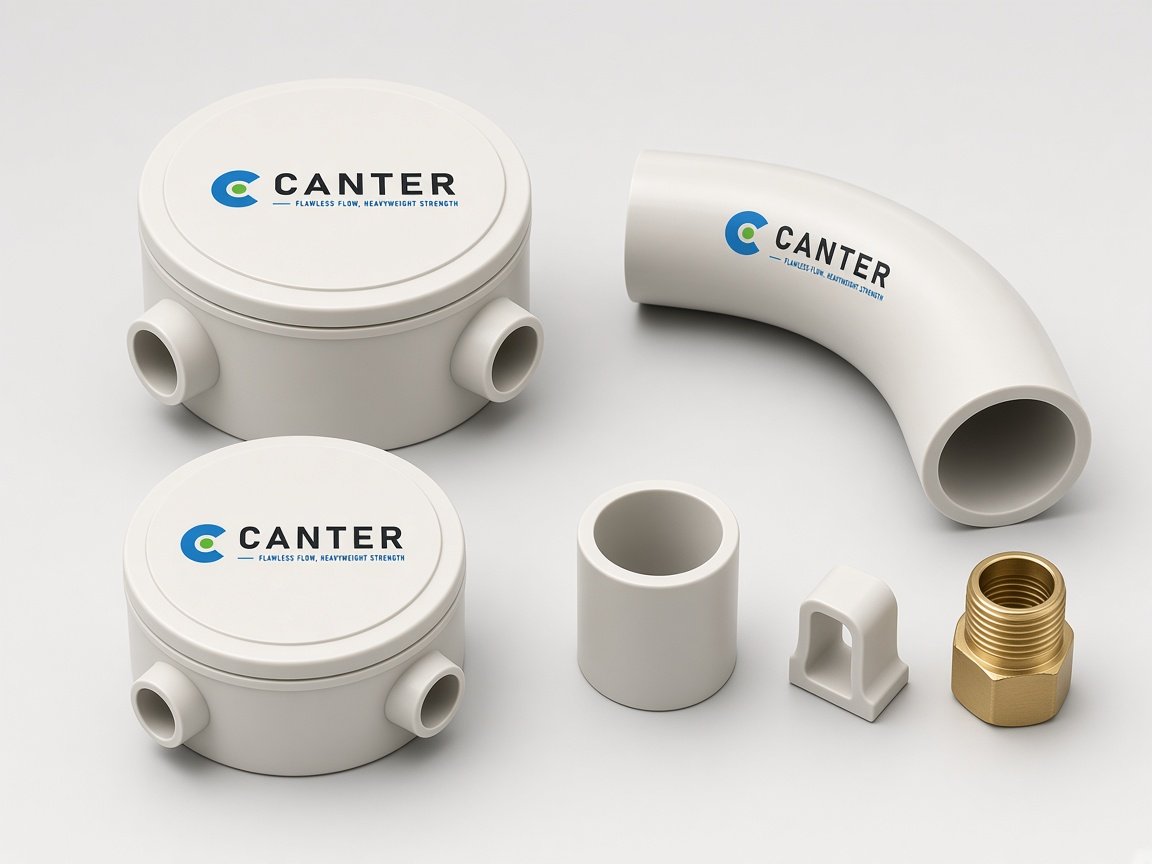
Smooth sweeps and 90° bends for turning corners without kinking the cable run.
Straight couplers to extend a run and reducers to step between sizes.
Circular boxes with one-, two-, three- and four-way entries, with screw-on lids.
Clips and saddles for surface fixing, and brass-threaded adapters for equipment connections.
Follow the cement manufacturer's instructions and local wiring regulations. Our team can help with project-specific questions.
FAQ
They are classes of mechanical stress - light, medium and heavy. The higher the class, the thicker the wall and the more crushing and impact load the conduit can take. LMS suits surface and ceiling wiring, MMS suits concealed wall wiring, and HMS suits slabs, underground and industrial runs.
MMS is the usual choice for concealed wiring in walls and internal masonry. If the conduit will be buried in concrete, choose HMS.
HMS. Its thicker wall is built to resist the weight and vibration of concrete being poured and compacted around the conduit.
Standard nominal sizes are 20, 25, 32, 40 and 50 mm in 3 m lengths. Ask us if you need other sizes, and tell us which sizes you use most so we can quote accurately.
With sockets or couplers and solvent cement made for rigid PVC conduit. Brass-threaded adapters are used to connect to switchgear, boxes and equipment.
Yes - bends, couplers, tees, saddles, adapters and circular junction boxes to go with the conduit. Use the enquiry form to list what you need.
Yes. We supply dealers, electrical distributors and contractors. Tell us your location and expected quantity using the enquiry form.
Tell us what you need - pipe sizes, quantities, delivery location. Our team will get back to you with a quote.