


Why choose CANTER UPVC
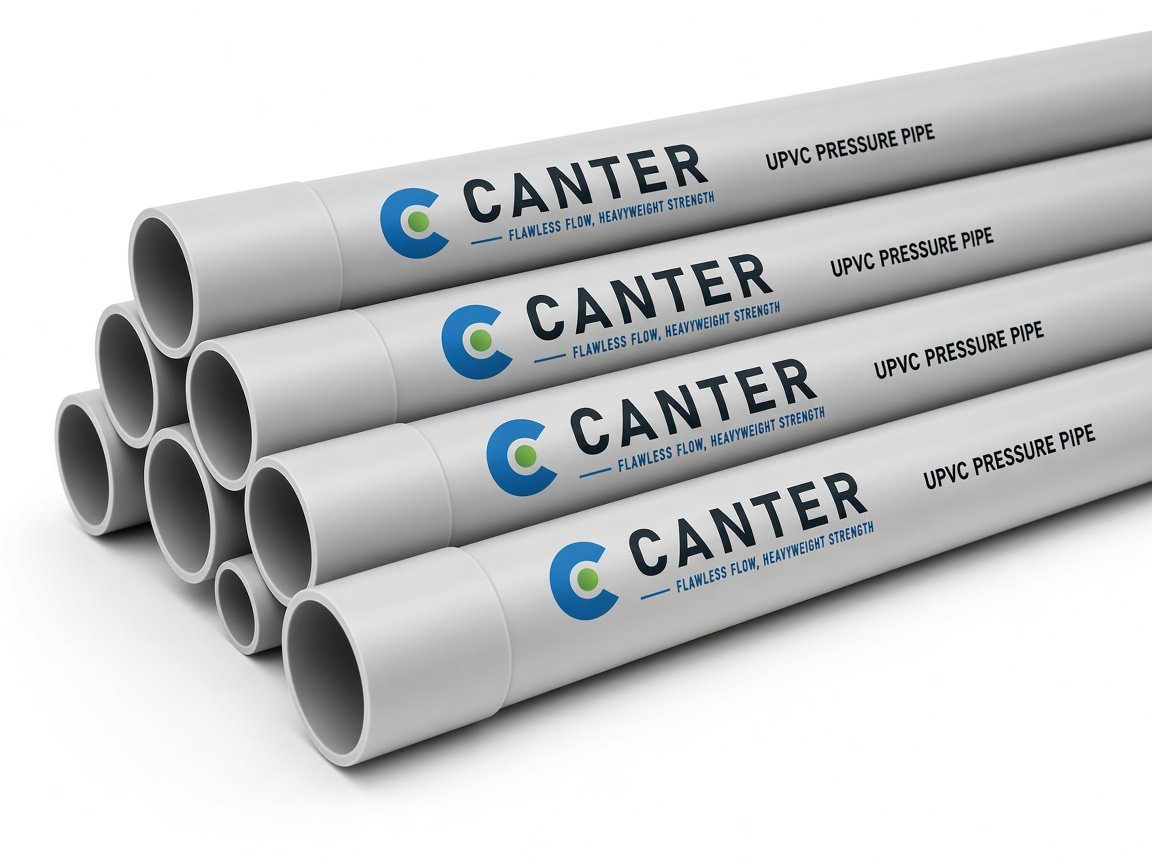
- Virgin PVC resin, no scrap - made from high-quality virgin PVC resin; no scrap, regrind or recycled material is used.
- Corrosion-free - no rust, pitting or scaling; suited to a wide range of soils and water chemistries.
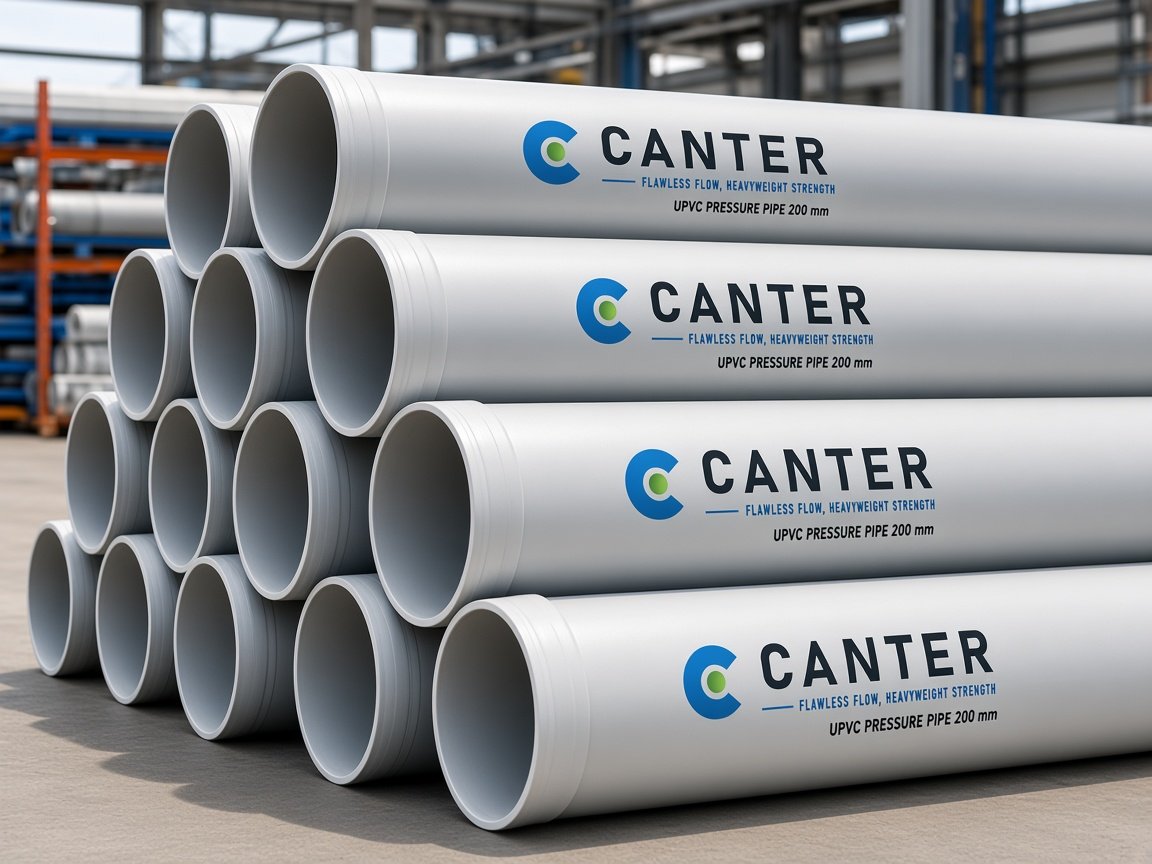
- Wide size range - 20 mm to 200 mm, so service lines and big mains come from one supplier.
- Pressure classes for every job - from 2.5 to 10 kgf/cm², so you pay for the wall thickness you actually need.
- Smooth bore - low friction for efficient flow and lower pumping effort.
- Lightweight - easy to transport, cut and install, even on long runs.
- Chemical resistance - stands up to most acids, alkalis and salts, for industrial and agricultural duty.
Where UPVC pipes are used
- Cold potable water supply to buildings, colonies and plots
- Agriculture - irrigation mains, sprinkler and drip headers, farm lines
- Borewell and submersible-pump columns
- Water treatment, swimming-pool and utility cold-water lines
- Industrial process lines for cold water and mild chemicals
Need hot water? UPVC is meant for cold water. For hot-and-cold plumbing, use our
CPVC pipes and fittings. For gravity drainage use
SWR pipes.
Choosing the right class
- Class 1-2 (2.5-4 kgf/cm²) - low-pressure gravity-fed and pumped lines in larger sizes.
- Class 3 (6 kgf/cm²) - the usual choice for farm mains and building supply.
- Class 4-5 (8-10 kgf/cm²) - higher-pressure pumped lines, risers and long runs with surge.
Not sure? Send us your flow, length and pump head and we will suggest a size and class.
Installation tips
- Cut the pipe square, then remove burrs and chamfer the spigot end.
- Dry-fit and mark the depth of the socket on the pipe.
- Apply solvent cement suited to UPVC to the pipe end and socket, push home with a quarter-turn and hold for a few seconds.
- Allow the joint to cure for the time stated by the cement maker before pressure testing.
- Support and bury the line on a smooth bed free of stones; protect exposed lines from long sun exposure.